The Technology Seduction That Destroys Care Businesses
The elder care industry right now is drowning in a seductive narrative: technology will solve everything.
AI monitoring systems
Fall detection sensors
IoT sensors tracking vital signs
Automated medication dispensing
Remote health monitoring
Machine learning analytics
The promise is compelling: reduce labor costs, improve safety, attract quality-conscious families, create operational efficiency.
Let me be direct about what I’ve observed on the ground, in actual care facilities, over 17 years:
Most of it is meaningless. Because the families choosing where to place their parents are not looking at technology specs. They’re looking at something else entirely.
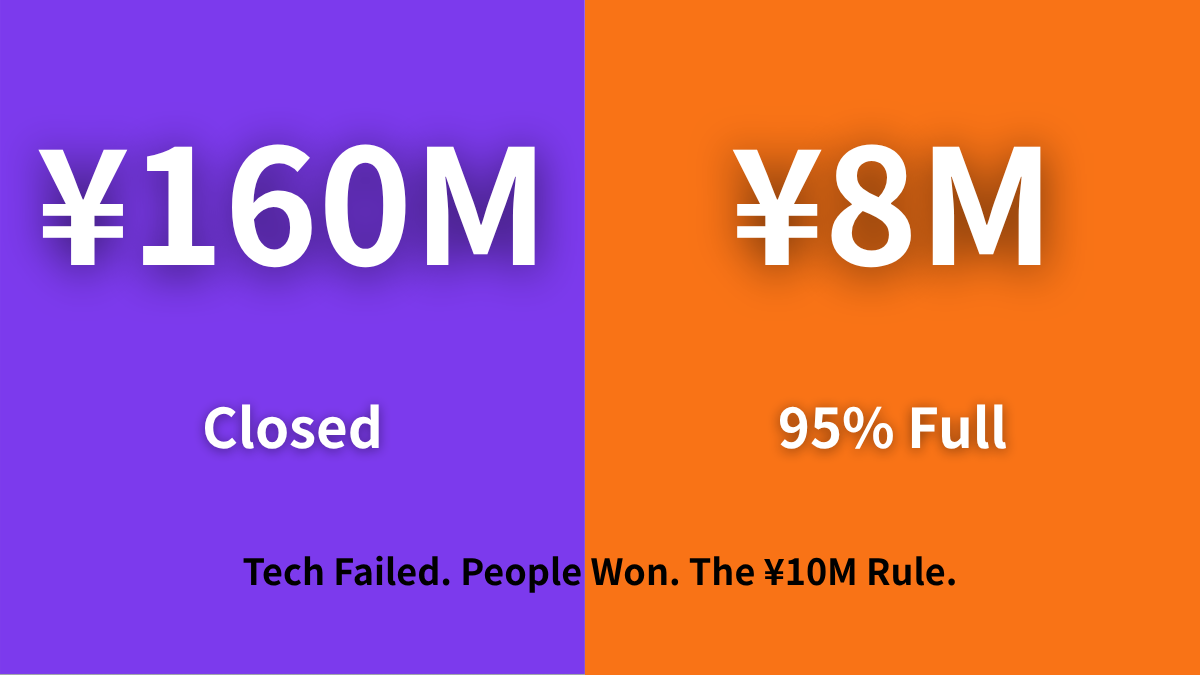
Case A: ¥160 Million in Technology Investment. Closed in 18 Months.
The following is a composite scenario based on patterns I’ve observed repeatedly across 17 years in the care facility industry. The details are illustrative of a pattern, not a single facility.
A USA-trained entrepreneur with significant capital built a care facility in an ASEAN market with a technology-first philosophy:
Investment Allocation
Full AI monitoring system: ¥80M
Automated medication dispensing: ¥35M
Sensor-equipped rooms throughout facility: ¥30M
Staffing minimized—technology was supposed to replace human labor: ¥15M
The Business Model
“Reduce labor costs through technology. Attract quality-conscious families through innovation. Create operational efficiency through automation.”
The Results After 18 Months
Occupancy: 42%
Staff turnover: 78% (highest in the region)
Monthly losses: ¥3,200,000
Outcome: Permanent closure
Why It Failed
It felt cold.
When families walked through the facility, they saw impressive equipment. Impressive sensors. Impressive displays. But they also felt something else: absence. The absence of warm human presence. The absence of staff attention. The absence of genuine care.
Families consistently said the same thing when making their decision: “Amazing technology. But I wouldn’t leave my parent here.”
The facility had invested ¥160M in the wrong thing.
Case B: ¥8 Million in People Investment. 95% Occupancy. Three-Month Waiting List.
In the same city, a facility built on the opposite philosophy:
Investment Allocation
Standard equipment (clean, well-maintained, appropriate): ¥2M
Staff training and education program: ¥3M
Family communication systems (phone, messaging, reporting): ¥1.5M
Quality food program and kitchen: ¥1.5M
The Business Model
“Invest heavily in staff quality, training, and capability. Create genuine family communication and engagement. Provide home-style care that feels personal and warm. Build through referrals, not marketing.”
The Results
Occupancy: 95%, consistently full with a three-month waiting list
Staff turnover: Negligible (3% annually)
Monthly profit: Consistent and growing
Outcome: Expanding to a second location within five years
Why It Succeeded
It felt safe. That’s it.
Families walked in and felt genuine care. Staff knew residents by name. Communication with families was proactive and warm. The food was home-style. The facility felt like a place where their parent would genuinely be cared for as a person, not managed as a case.
The facility had invested ¥8M in the right thing, and it generated sustainable success.
The Comparison: Same Market. Opposite Outcomes.
Factor Case A: Technology-First Case B: People-First
Initial Investment ¥160,000,000 ¥8,000,000
Primary Focus AI monitoring, automation, cost reduction through technology Staff quality, family communication, genuine care
Year One Occupancy 42% 95%
Staff Turnover 78% annually 3% annually
Patient Waiting List None (struggling to fill beds) Three months
Monthly Financial Result Loss of ¥3.2M Consistent profit growth
Outcome Permanent closure at 18 months Expanded to second location
Same market. Same elderly population. Same regulatory environment. Opposite outcomes based entirely on where the investment went.
The Only Question Families Are Actually Answering
When a family chooses a care facility, they’re answering one question and one question only:
“Will these people take care of my parent with genuine warmth and respect?”
Everything else is secondary.
When families evaluate a facility, they look at four things:
1. Are the Staff Smiling?
Not manufactured smiles. Genuine smiles that suggest the staff actually care about the residents and their wellbeing.
2. Do They Call Residents by Name?
Does the staff address residents as individuals with identity and history, or as “the patient in room 3”?
3. Do They Communicate Proactively with Families?
Do families need to call and ask for updates, or do facility staff reach out without being prompted to share news about their parent?
4. Is the Food Decent and Home-Style?
Can residents enjoy meals that remind them of home and family traditions, or are they eating institutional food from a heating cart?
AI and sensors have nothing to do with any of these four things.
Technology cannot smile. Technology cannot call someone by name with warmth. Technology cannot make proactive family calls. Technology cannot cook home-style meals with love.
My Conclusion After 17 Years: It Has Never Changed
I don’t reject technology. Monitoring systems can be useful. Medication tracking can prevent errors. Fall detection can save lives.
But the priority is wrong for most operators.
People first. Technology second. Reverse the order and you will fail.
The operators succeeding in ASEAN markets over 17 years are not the ones with the most impressive technology. They’re the ones with the most committed staff, the strongest family relationships, and the deepest trust in their local communities.
The ¥10 Million Investment Rule
If you have ¥10,000,000 to invest in your care facility, here’s how I recommend splitting it:
Not ¥5 million on equipment and ¥5 million on people.
¥8 million on people. ¥2 million on equipment.
Category Amount Purpose
Staff recruitment and training ¥3,000,000 Hire quality caregivers, provide comprehensive training, build team culture
Staff compensation and retention ¥3,000,000 Competitive salaries, benefits, ongoing professional development
Family communication systems ¥1,500,000 Technology for family updates, proactive communication, transparency
Food and dining program ¥500,000 Quality ingredients, skilled cooking, home-style meal preparation
Basic facility equipment ¥1,500,000 Care beds, monitoring systems, safety equipment, furniture
Property preparation and renovation ¥500,000 Accessibility, comfort, safety standards
That’s the answer from 17 years on the ground. Technology doesn’t fill beds. Relationships fill beds. Staff quality fills beds. Family trust fills beds. Invest accordingly.
Ready to Build a People-First Care Facility That Fills Beds?
Get the complete framework—showing exactly why ¥160M technology investment failed while ¥8M people investment achieved 95% occupancy, and how to structure your own care business for sustainable success.
Two ways forward
Take what you need from here.
If you’re starting
The Care Facility Starter Kit
Six free guides I use myself in the operation of small-scale care facilities — financial planning, property evaluation, the first 90 seconds of family tours, and referral partner outreach. The materials I share with operators who reach out to me directly.
6 PDFs · Pay what you want · Instant download
If you’re past the basics
Complete USA + ASEAN Care Business Bundle
Six in-depth operator guides covering USA market entry, state selection across 9 states, the full financial model, staff hiring & retention, and ASEAN market entry — plus 16 working Excel templates I use myself: hiring scorecard, financial simulator, 1-on-1 tracker, retention analytics, and more.
View the Complete Bundle — $167
6 guides + 16 Excel templates · One-time purchase · Instant download
Koujirou Nagata · 17 years operating small-scale care facilities · 3 facilities built · $2.7M M&A exit · Currently operating
Join Entrepreneurs Building Real Care Facilities Based on Genuine Human Connection
Koujirou Nagata
17 years operating small-scale care facilities · 3 facilities built · $2.7M M&A exit · Currently operating