Why Fire Inspections Kill More Opening Timelines Than Any Other Factor
Your licensing is approved. Your staff is hired and trained. Your residents are waiting. Everything is ready.
And then the fire inspection fails.
Re-inspection takes weeks. During that time, rent flows out every day. Payroll flows out every week. And zero revenue flows in. This “dead time” can cripple a new facility’s finances before it ever opens.
Most entrepreneurs assume that if the renovation looks complete and professional, the inspection will pass. They’re wrong.
Fire inspections don’t evaluate how “finished” your facility looks. They evaluate regulatory compliance—precise measurements, specific equipment standards, and documented procedures. A facility that looks perfect can fail instantly if a single specification is off.
The 5 Most Common Reasons Care Facilities Fail Fire Inspections
Evacuation route width violations: The most frequent failure in converted residential properties. Minimum hallway widths are specified precisely. Even furniture placement can push a corridor below minimum width requirements. Inspectors measure.
Fire alarm placement errors: Kitchens are the most overlooked area. Specific detector types are required in cooking areas, and most contractors miss this. Heat detectors vs smoke detectors matter. Placement matters. Distance from cooking equipment matters.
Expired fire extinguishers: Having extinguishers installed means nothing if they’re past their certification date. Inspectors check every single one. An extinguisher from 2015 will fail an inspection in 2024, even if it looks fine.
Non-fire-retardant curtains: Standard curtains are an automatic failure. Every curtain in the facility must carry a fire-retardant certification label. No exceptions. Inspectors check. This alone has failed numerous facilities.
Missing evacuation drill records: Even before opening, inspectors want to see that you have an evacuation system in place. Not just a plan on paper—documented evidence that you’ve actually run a drill. Date, time, participants, results.
Why the Same Mistakes Keep Happening
The reason is simple and predictable:
Entrepreneurs treat fire inspections as the last step instead of the first.
They complete renovations, then schedule the inspection, then discover problems that require reconstruction, additional costs, and delayed openings.
By the time they see the failure, it’s too late to prevent it.
A fire inspection is not something you “pass at the end.” It’s something you plan for from the very beginning.
The 5-Step System That Gets First-Attempt Approval Every Time
Step 1: Visit the Fire Station with Floor Plans Before Renovation Begins
Timing: Before any construction work starts
Bring your architectural drawings to the local fire department for a pre-consultation. Ask them to review your plans against current fire safety codes.
This single visit eliminates approximately 80% of potential inspection failures.
Why? Because you’re getting the fire department’s perspective before you build anything. You’re learning exactly what they’ll be looking for when they inspect. You’re incorporating compliance into your design rather than trying to retrofit it afterward.
The benefit: Most fire departments welcome these consultations. It makes their job easier when the final inspection arrives. They appreciate operators who take safety seriously enough to consult them in advance.
What to ask: “Based on our floor plan, what are the most critical fire safety elements we need to ensure compliance with? Are there any aspects of our design that concern you?”
Step 2: Hire a Contractor with Fire Safety Certification
Timeline: During renovation planning
The cheapest contractor is always the most expensive in the long run.
A contractor certified in fire safety equipment installation knows the exact specifications inspectors require. They install systems correctly the first time, eliminating re-work costs that far exceed the premium you pay for qualified work.
The cost difference: A certified contractor might cost 15-20% more upfront. A failed inspection and reconstruction costs 300-500% more in delays, re-work, and operational losses.
What to verify: Ask contractors for proof of fire safety certification, references from other care facilities, and examples of recent installations.
Step 3: Conduct Your Own Mock Inspection Two Weeks Before
Timeline: Two weeks before scheduled inspection
Walk every corridor. Measure every evacuation route width. Check every fire extinguisher date. Verify every curtain label. Test every alarm. Inspect emergency lighting. Check signage clarity.
Two weeks gives you enough time to fix anything you find without rushing or creating a crisis atmosphere.
What to create: A checklist that mirrors what the fire inspector will look for. Go through the facility as if you were the inspector. Be ruthless in identifying problems. Better to find them yourself than to have the inspector find them.
The benefit: You fix issues on your timeline, not the inspector’s. You maintain control of the process.
Step 4: Run One Evacuation Drill and Document It
Timeline: One week before inspection
You don’t need a perfect drill. You don’t need choreographed precision. You need documented proof that you conducted one.
Document everything: Date, time, participants, evacuation route used, time to evacuate, any issues identified, any corrections made.
This documentation signals to inspectors that you take safety seriously.—and that credibility matters enormously. Inspectors are humans. They respond positively to facilities that demonstrate genuine commitment to safety versus those that view compliance as a box to check.
Include: Photos of the drill, staff participation list, evacuation time records, any issues that were identified and corrected immediately.
Step 5: Prepare a Master Equipment List with Expiration Dates
Timeline: One week before inspection
Create a single document listing every fire extinguisher, alarm, detector, and safety device in the facility.
For each item include: Location, equipment type, installation date, expiration date, certification status, last maintenance date.
When an inspector sees this level of organization, it immediately establishes trust. Organized operators get smoother inspections. Inspectors spend less time verifying what they can already see documented. They focus on functionality rather than detective work.
Format suggestion: A simple spreadsheet with columns for location, equipment type, serial number, installation date, and expiration date. Have it available and ready to show the inspector.
The Inspector’s Perspective: How to Think Before Every Inspection
This is the most important habit I’ve developed over 17 years.
Before every inspection, I walk through my facility and ask one question:
“If I were the fire inspector, what would I flag?”
Can I see the evacuation routes immediately? Is every piece of equipment where it should be? Does the documentation match what’s physically installed? Are all expiration dates current? Is signage clear and visible?
Inspectors follow predictable patterns. They check the same things every time. When you align your perspective with theirs before they arrive, you control the outcome.
Think like an inspector. Find problems before they do. Fix them. Then schedule the inspection.
The Hidden Cost of Failure That Nobody Calculates
A failed fire inspection isn’t just a scheduling delay. The damage goes far deeper:
Staff morale drops: Your team was ready to start. Now they’re waiting with nothing to do. Growing doubt about whether this operation is professionally managed. Turnover risk increases.
Cash reserves erode: Every week of delay burns operating expenses with zero income. For a facility budgeted with three months of reserves, a four-week delay consumes one-third of your safety net. A second delay could consume your entire emergency fund.
Referral timing is lost: Care managers and discharge planners who were ready to send residents won’t wait. They’ll place those residents elsewhere. Getting back on their referral list takes months—if it happens at all.
Facility reputation starts before opening: Word gets around. “That facility delayed opening twice.” This narrative reaches care managers before your facility ever opens. It affects your occupancy potential from day one.
The Bottom Line: Preparation Determines Outcomes
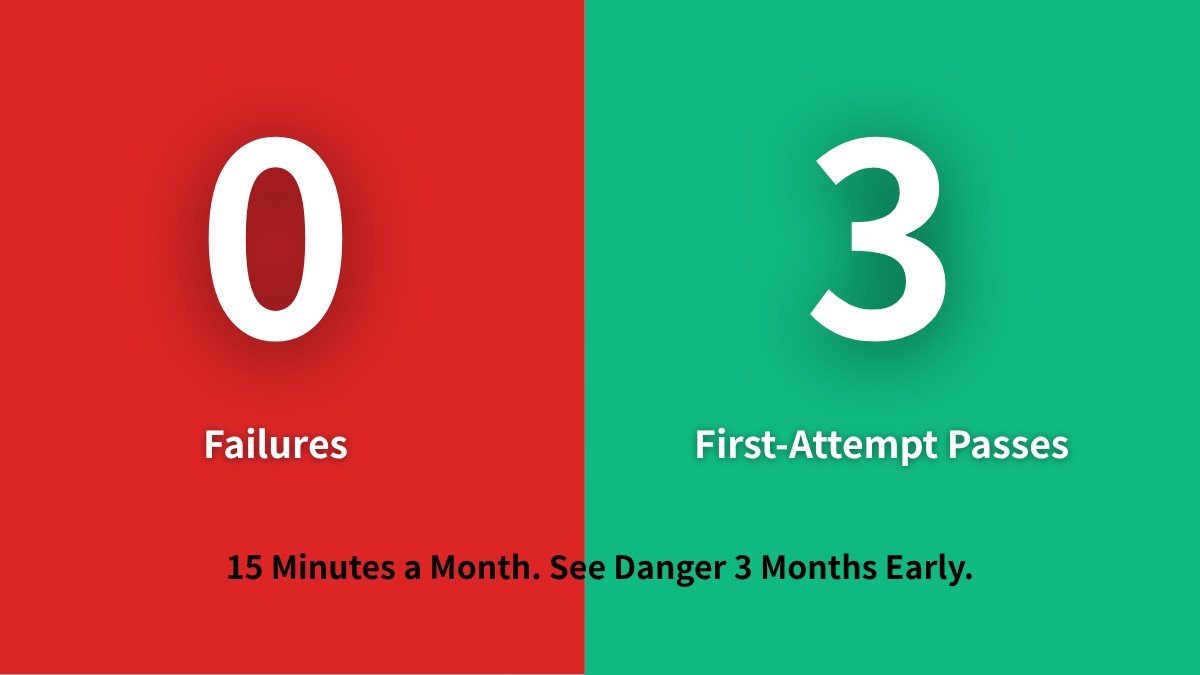
I passed fire inspections on the first attempt across all three of my facilities. There was nothing exceptional about my facilities. There was nothing lucky about my results.
I did one thing consistently:
I eliminated every possible failure point before the inspector arrived.
Fire inspections are not about luck. They’re not even about technical knowledge. They’re about preparation.
The operators who prepare are the ones who open on time, on budget, and start generating revenue from day one.
Ready to Pass Fire Inspections First Attempt?
Get the complete fire inspection framework—showing exactly how to eliminate delays, pass first-attempt approval, and avoid the hidden costs that bankrupt new facilities.
About the author
Koujirou Nagata
I’m a Japanese care facility operator based in Kobe, Japan. Over 17 years, I built three small-scale residential care homes in the U.S., sold two of them for $2.7M in a 2022 M&A exit, and currently operate a third. My staff turnover has held at roughly 3% — against a U.S. industry average of 34.53% — and the majority of my admissions have come through family referrals rather than paid marketing.
I now help U.S. and ASEAN operators of small-scale residential care homes — board and care homes, adult family homes, and similar facilities — apply the same operating methods to their own launches and expansions. The resources I’ve built reflect what I actually use, not what looks good on paper.
More at smallcarefacility.com
Two ways forward
Take what you need from here.
If you’re starting
The Care Facility Starter Kit
Six free guides I use myself in the operation of small-scale care facilities — financial planning, property evaluation, the first 90 seconds of family tours, and referral partner outreach. The materials I share with operators who reach out to me directly.
6 PDFs · Pay what you want · Instant download
If you’re past the basics
Complete USA + ASEAN Care Business Bundle
Six in-depth operator guides covering USA market entry, state selection across 9 states, the full financial model, staff hiring & retention, and ASEAN market entry — plus 16 working Excel templates I use myself: hiring scorecard, financial simulator, 1-on-1 tracker, retention analytics, and more.
View the Complete Bundle — $167
6 guides + 16 Excel templates · One-time purchase · Instant download
Koujirou Nagata · 17 years operating small-scale care facilities · 3 facilities built · $2.7M M&A exit · Currently operating
Join Entrepreneurs Opening Care Facilities On Time and On Budget
Koujirou Nagata
17 years operating small-scale care facilities · 3 facilities built · $2.7M M&A exit · Currently operating